
 Subject Comment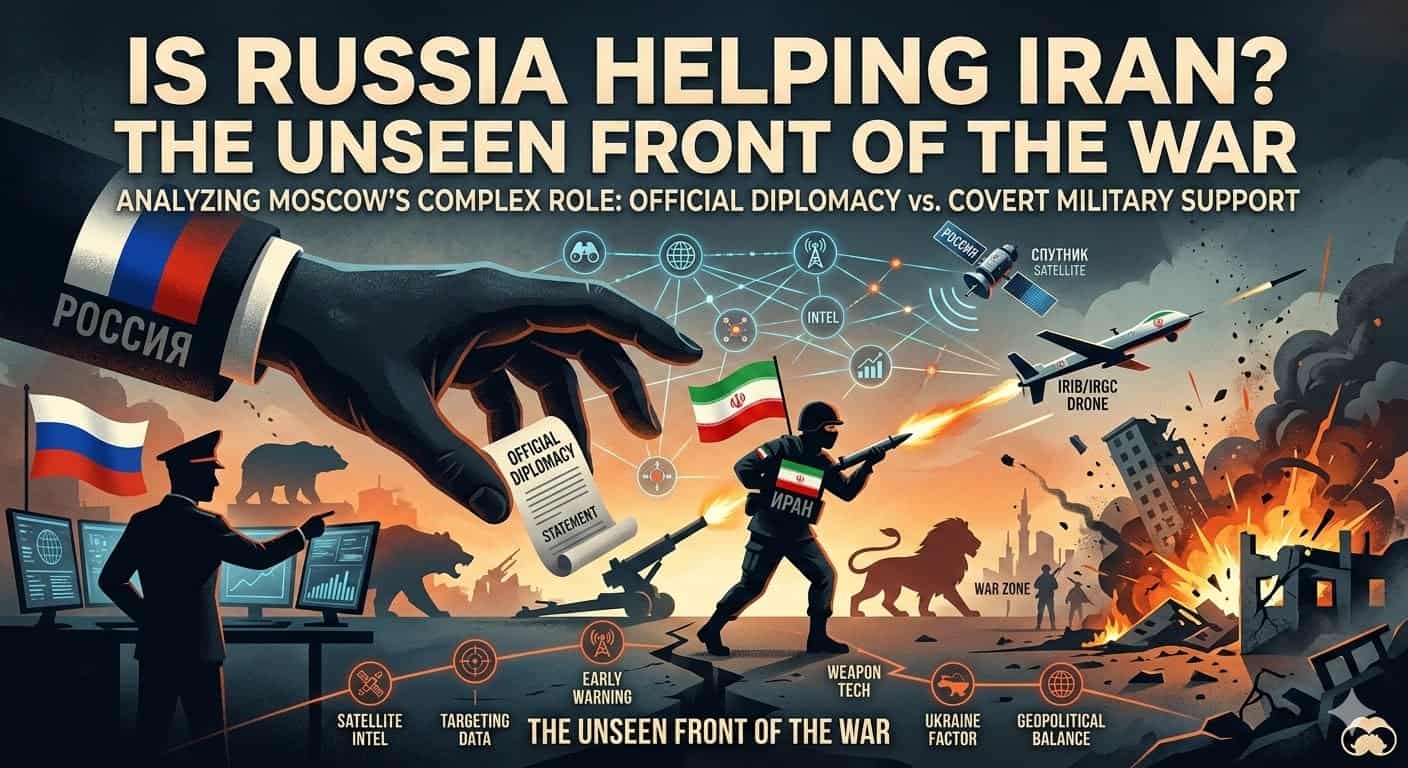
Recent developments in the Middle East over the past few weeks are not limited to direct military clashes between Iran, Israel, and the U.S. The real debate centers on how the major powers standing behind this conflict are positioning themselves. At this point, one of the most frequently asked questions is: Is Russia truly helping Iran in the face of U.S. and Israeli attacks?
The answer is more complex than it appears at first glance. Moscow’s stance seems to be based on a two-layered strategy: aloof diplomacy at the official level, and the possibility of limited, invisible support behind the scenes.
The Genetics of Turkish Foreign Policy
Okumak istersen →The emerging picture points to a geopolitical relationship far more intricate than a classic military alliance.
Russia–Iran Partnership: Alliance or Strategic Alignment?
The relationship between Russia and Iran has deepened remarkably over the last decade. From the Syrian war to the war in Ukraine, the two countries have become strategic partners with converging interests in many areas.
The Comprehensive Cooperation Agreement signed in 2025 is seen as one of the most concrete steps of this rapprochement. The agreement establishes a broad framework for cooperation in defense technologies, energy, military coordination, and regional security.
However, there is a critical detail: This agreement does not include a NATO-style mutual defense obligation. In other words, Russia is not automatically required to enter the war if Iran is attacked. This provides Moscow with significant maneuverability.
Consequently, Russia’s current stance can be summarized in three points:
-
Diplomatically condemning U.S. and Israeli attacks.
-
Bringing the crisis to the agenda of international platforms.
-
Making statements aimed at preventing the escalation of the conflict.
While the Russian Ministry of Foreign Affairs describes the attacks as “unprovoked armed aggression,” the Kremlin appears to be specifically avoiding a military response.
Western Media Claims: Is Russia Providing Intelligence?
The real intensity of the debate begins beyond official statements. Some Western media outlets and security circles claim that Russia is providing indirect military support to Iran.
According to these claims, Moscow is:
-
Sharing targeting intelligence via satellite systems.
-
Providing early warning data regarding U.S. and Israeli military movements.
-
Facilitating the coordination of Iranian drone and missile strikes.
Iran’s ability to hit certain targets near U.S. military assets in the Middle East during the early days of the conflict is cited as an example strengthening these claims. It is frequently suggested that Russia’s advanced military satellite network may have enhanced Iran’s targeting capabilities. However, most of these claims remain officially unconfirmed.
Is Moscow’s Silence a Strategy?
Many analysts describe Russia’s current attitude as “strategic silence.” From Moscow’s perspective, a total collapse of Iran would represent a major geopolitical loss because Iran is:
-
One of the most important regional actors in the anti-U.S. bloc.
-
A power that balances Western influence in the Middle East.
-
A key partner in energy and military cooperation.
A regime change in Iran leading to a pro-Western government could drastically weaken Russia’s influence in the region. Despite this, Russia’s refusal to enter the war directly is notable, driven by several key factors:
1. The Ukraine Factor
Russia is already fighting a major war in Ukraine. Engaging in a direct military conflict with the U.S. for Iran’s sake is an extremely risky scenario for Moscow. A “two-front” great power conflict could severely strain Russia’s military and economic capacity.
2. The Israel and Gulf Balance
Another reason for Russia’s hesitation is the delicate balance it maintains with Israel and Gulf countries. A complex but functioning relationship exists between Russia and Israel, including a “deconfliction mechanism” in Syria. Similarly, energy diplomacy with Saudi Arabia and the Gulf states via oil markets is of critical importance. Russia is unlikely to risk these relationships entirely for Iran.
Does a Protracted War Benefit Moscow?
According to some analysts, Russia’s ultimate strategic calculation is not the total end of the war, but its controlled prolongation. This scenario offers several advantages:
-
U.S. military and political resources would be forced to pivot toward the Middle East, weakening Washington’s global pressure capacity.
-
A long-term U.S. military engagement in the Middle East could indirectly shift the balance on the Ukrainian front in Russia’s favor.
China’s Quiet Calculation
China is another vital actor in this equation. Beijing does not want a total collapse of Iran either, as Iran is both a major energy supplier and a critical link in the Belt and Road Initiative. However, like Russia, China studiously avoids direct military intervention. The joint strategy of Moscow and Beijing can be summarized as: “Do not leave Iran alone, but do not risk a direct war with the U.S.”
Conclusion: Invisible Support, Visible Distance
Looking at the current landscape, it is difficult to say Russia is providing overt military support. Conversely, it is unrealistic to claim they are entirely neutral.
The strategy points toward “invisible support, visible distance.” Moscow likely does not want Iran to be utterly defeated, but it will not risk a direct war with the United States for Iran’s sake. Therefore, Russia’s role in the Iran crisis appears less like an open ally and more like a strategic partner operating in the shadows.
The critical question that will determine the course of the war in the Middle East may be this: Will Russia allow Iran to fall, or will it make moves at the last moment to tip the scales?