 Subject Comment
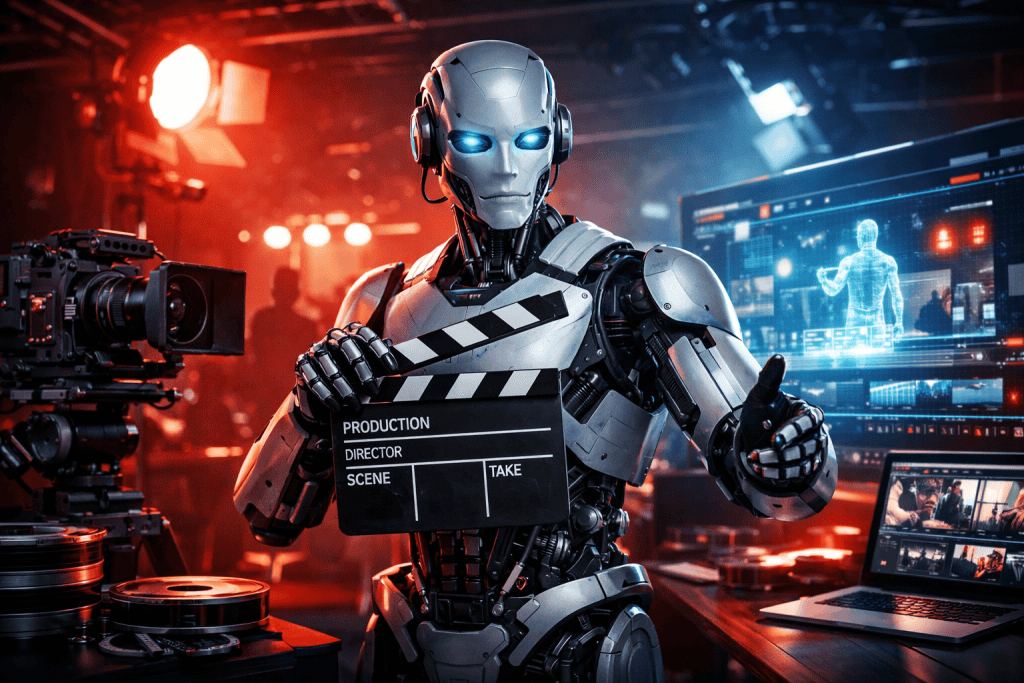
Hollywood’s history is a narrative shaped by technological disruptions. The transition from silent films to “talkies,” the evolution from black-and-white to color, the leap from analog to digital post-production… Every transformation has sparked both excitement and anxiety within the industry, transforming certain professions while giving birth to new ones. Today, the integration of artificial intelligence technologies into the cinema industry stands before us as the newest—and perhaps the most radical—of these historical ruptures.
Netflix’s acquisition of InterPositive, the AI company secretly founded by Ben Affleck, is a concrete manifestation of this shift. However, this acquisition signifies much more than a simple technology transfer; it represents the beginning of a paradigmatic debate regarding the role of AI in creative industries.

The Genetics of Turkish Foreign Policy
Okumak istersen →InterPositive: AI That Speaks the Language of the Set
The fundamental characteristic that distinguishes InterPositive from other AI startups in the sector lies in its philosophical approach. Unlike general generative models like text-to-video or image-to-video, InterPositive develops specialized models trained on a film’s own raw footage (dailies). This means AI is positioned not as an “externally” imposed visual regime, but as a tool that learns the film’s unique aesthetic language.
On a technical level, the solutions offered by InterPositive can be grouped into three main categories:
-
Post-production optimization: Correcting lighting errors, resolving color inconsistencies, and automatically fixing continuity issues.
-
Completing missing shots: Models capable of generating missing scenes based on existing footage, thereby reducing the costs of reshoots.
-
Accelerating visual effects (VFX): Tools that streamline VFX workflows and reduce the workload of technical personnel.
The common denominator of these tools is the goal of minimizing technical barriers while keeping creative control in human hands. As Affleck puts it: “It removes technical hurdles and allows us to focus on the story.”
The Acquisition as a Strategic Move
Netflix’s absorption of InterPositive is a significant step for the company’s long-term content strategy. The long-standing collaboration with Affleck (the film The Rip, the Artists Equity deal) appears to have laid the groundwork for this acquisition. Coming immediately after withdrawing from the Warner Bros. Discovery bidding, this move signals Netflix’s goal to increase efficiency and reduce costs in content production.
While the financial details remain confidential, the fact that the 16-member InterPositive team joined Netflix—with Affleck serving as a senior consultant—shows that the deal is not just a technology transfer, but an integration of talent and vision.
Industrial Reflections: Opportunities and Concerns
The Productivity Paradox The proliferation of InterPositive-type tools promises a radical increase in production efficiency. Faster post-production, lower budgets, a decreased need for reshoots… Theoretically, these developments could mean more content production and the realization of more diverse stories. For independent producers and low-budget projects especially, these tools may offer opportunities that were previously inaccessible.
The Labor Debate However, efficiency always comes at a price. For editors, VFX artists, and colorists working in post-production, these technologies could signify the automation of their jobs. This is where the concerns of Hollywood unions are rooted. AI regulations were a major topic in the recent strikes by the WGA (Writers Guild of America) and SAG-AFTRA; this acquisition serves as a reminder of how pertinent the unions’ demands truly were.
The Ethical Dimension Perhaps the most distinguishing feature of InterPositive’s approach is its adherence to ethical design principles. Training models exclusively on a film’s own data minimizes issues such as copyright infringement and the unauthorized use of “learned” content. This provides an ethical roadmap for how AI can be integrated into creative industries.
The Philosophical Dimension: Creativity vs. Automation
The intervention of AI in artistic production revives ancient questions about the nature of creativity. Is art an original expression of the human being, or a collective production shaped by the evolution of tools? Did the invention of photography announce the death of painting, or did it offer painters new modes of expression?
Ben Affleck’s statement, “I was afraid at first, now I embrace it,” is a personal reflection of this philosophical tension. The fear concerns AI taking over the creative process; the embrace stems from the relief of seeing it as a tool. Indeed, in the case of InterPositive, AI is positioned as an “object” rather than a “subject”—not the storyteller, but the tool that facilitates the telling.
The Future of Cinema: Transformation or The End?
Prophecies regarding the end of cinema are as old as cinema itself. The spread of television, the entry of video into homes, the rise of the internet… Every new technology failed to justify those predicting the death of film; instead, cinema survived by transforming.
In the age of AI, cinema will likely undergo a similar transformation. Post-production processes will accelerate, technical perfection will become commonplace, and perhaps storytelling will become even more vital. Because no matter how much technology evolves, the source of stories that describe human experiences, emotions, and contradictions remains the human being.
It is likely that “authentic” experiences such as live performances, theater, and musicals will gain even more value in the coming period. In a world where technology makes everything possible, human existence—with its flaws, its “here and now” presence, and its spontaneity—may become more precious.
Conclusion: Tools Change, Stories Remain
Netflix’s acquisition of InterPositive is just one of many technological ruptures in cinematic history. Just as pianists lost their jobs during the transition to sound films, some professions today will transform or disappear. However, the desire to tell stories—the essence of cinema—will persist, as it has through every technological shift.
Perhaps the real issue is not what AI produces, but why humans produce. And that “why” will remain human, regardless of how advanced technology becomes. As Affleck emphasized: “AI protects and expands human creativity.” As long as we do not place the tool before the purpose.
Cinema will not end; it will simply learn a new language. And those who speak this language will continue to tell their stories.