 Subject Comment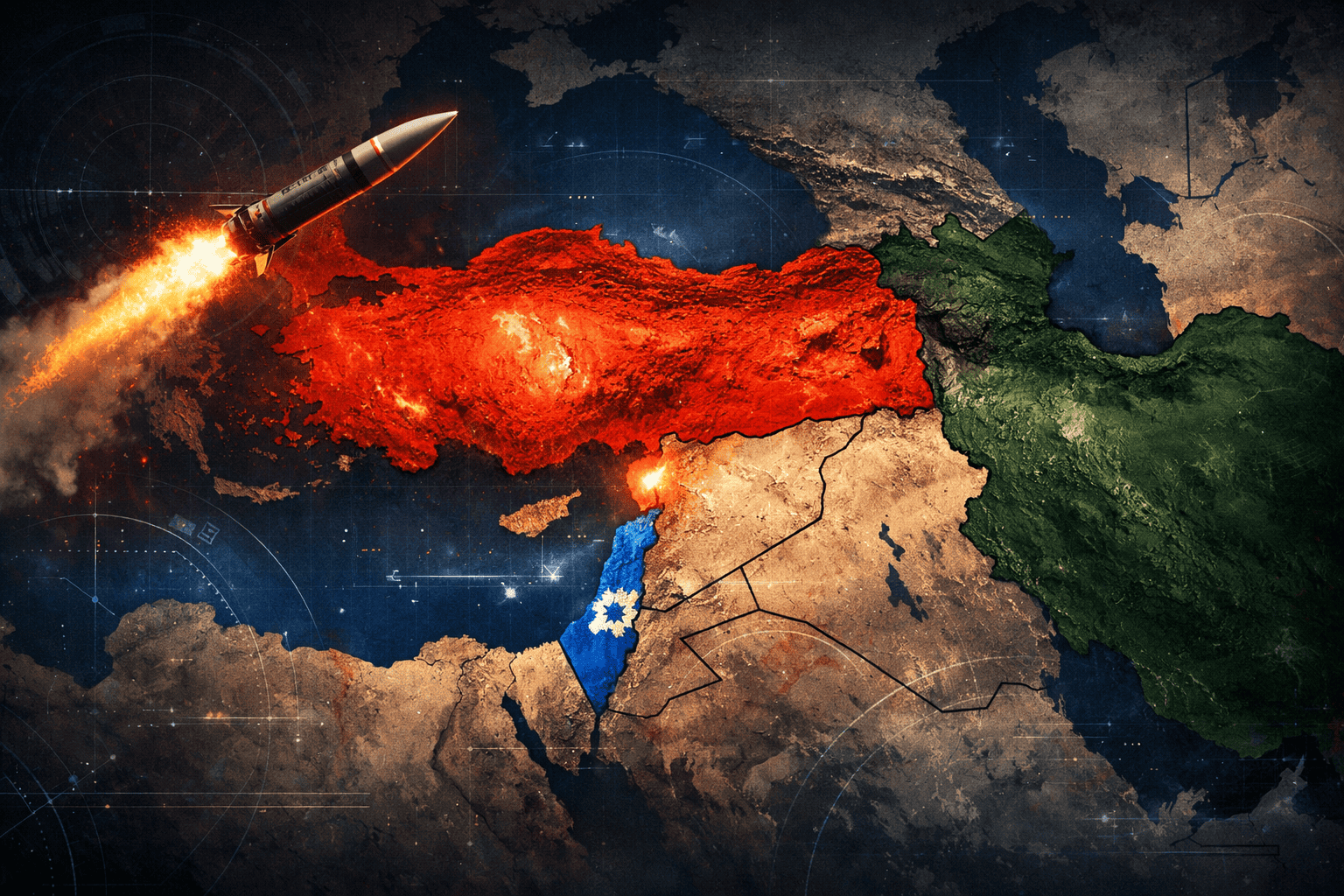
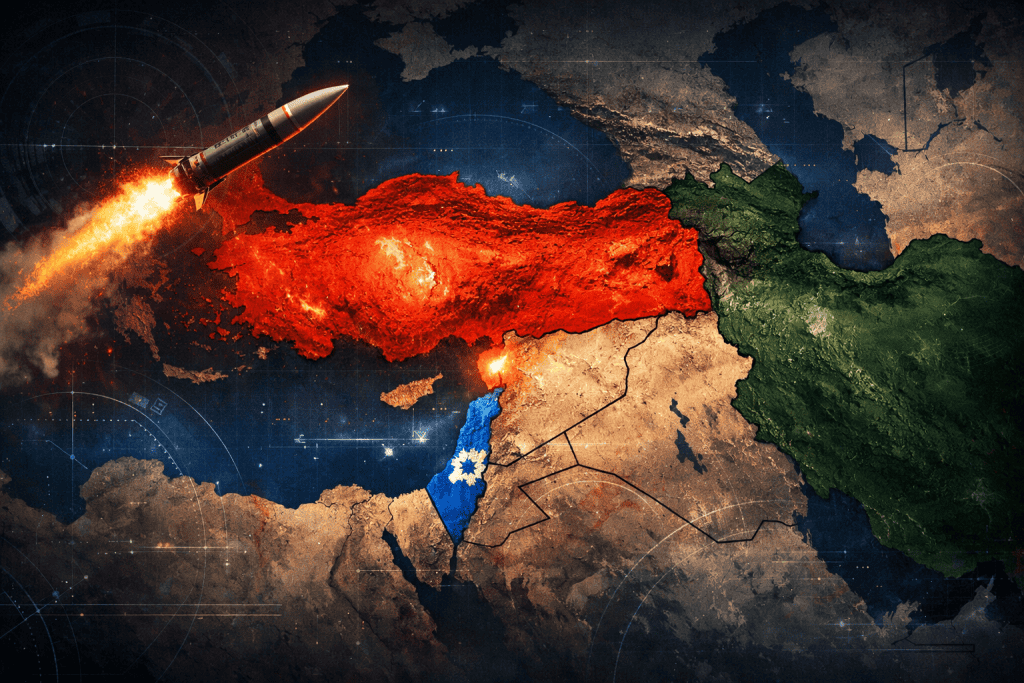
A direct ballistic missile attack by Iran on Türkiye would not simply create a new crisis along the Ankara–Tehran axis. Such a move would instantly transform the war in the Middle East from an “Iran–Israel–U.S. conflict” into a regional war pressing against NATO’s borders. Indeed, on March 4, 2026, Türkiye announced that a ballistic missile fired from Iran had entered Turkish airspace and was intercepted by NATO air-defense systems. According to Reuters, the incident was seen as the first time a NATO member state had come into such direct contact with the ongoing war. The United States expressed support for Türkiye but gave no indication that the situation had reached the threshold of Article 5.
The most critical point today is this: relations between Türkiye and Israel are effectively at rock bottom following the Gaza war. Ankara halted trade with Israel in 2024, and throughout 2025 Türkiye’s rhetoric toward Israel hardened. Israeli officials even openly opposed any potential Turkish military role in Gaza. By contrast, the Ankara–Washington relationship experienced a more pragmatic, security-oriented thaw during 2025. Reuters reported in March 2025 that both sides showed political willingness to remove obstacles in defense industry cooperation. For this reason, an Iranian attack on Türkiye may not reconcile Ankara with Israel, but it could accelerate Türkiye’s security partnership with the United States. In other words, while the Türkiye–Israel relationship may remain politically cold, the Türkiye–U.S. relationship could grow warmer out of military necessity.

The Genetics of Turkish Foreign Policy
Okumak istersen →The decisive factor here is the NATO mechanism. According to NATO’s official framework, Article 4 initiates consultations when a member’s security is threatened, while Article 5 establishes the political-military basis for considering an armed attack against one member as an attack against all. However, Article 5 does not automatically mean a declaration of war; each member provides assistance it deems necessary. Thus, a single, limited, misdirected, or indirectly interpreted missile strike by Iran would likely first bring Türkiye to the Article 4 consultation table. But if attacks continue, cause casualties, or directly target strategic facilities on Turkish soil, the discussion could shift toward Article 5. According to reports from March 5, NATO has raised its defensive posture but appears reluctant to move immediately toward invoking Article 5. This indicates that the alliance’s first instinct is not to enter the war, but to contain its expansion.
Would such an attack lead Türkiye to open American bases for military operations? The most realistic answer is: not automatically, but gradually yes. Critical facilities in Türkiye are not only national assets but also components of the broader NATO–U.S. security architecture. According to NATO statements, a radar system supplied by the United States operates at Kürecik, while Incirlik Air Base has long served as a strategic hub for U.S. and allied activities. Türkiye’s first preference would likely be to allow these bases to operate more actively not for offensive operations against Iran, but for air defense, early warning, logistics, intelligence, and deterrence. Ankara’s red line is avoiding the perception that Türkiye has become a direct member of an American-Israeli offensive coalition; its primary concern remains the protection of its own territory. However, if Iranian attacks persist, the defensive opening of these facilities could gradually evolve into broader operational involvement.
At this point, the 2003 Iraq War analogy becomes relevant. At that time, Türkiye approached cooperation with the United States with great caution due to domestic political debates, regional risks, and concerns over sovereignty. Today the situation is different: the threat is no longer abstract but has materialized as a direct missile threat touching Turkish airspace. Under such circumstances, it may be harder for Ankara to maintain the same level of distance it did in 2003. Nevertheless, Türkiye’s official stance in March 2026 still emphasizes diplomacy. President Recep Tayyip Erdoğan has described U.S. and Israeli attacks on Iran as violations of international law, while Foreign Minister Hakan Fidan stated that Türkiye is in contact with all parties and seeks to stop the war. In other words, Ankara’s current instinct is not to join a U.S. war against Iran, but to prevent the war from spilling into Türkiye. Yet if missile attacks continue, the gap between political rhetoric and military necessity could narrow rapidly.
In such a scenario, the war could evolve through four possible stages.
The first stage is controlled tension: Türkiye strengthens its air defenses, NATO consultations intensify, and the United States provides support, but Ankara does not formally enter the war.
The second stage is limited engagement: Incirlik, Kürecik, and other facilities are used more intensively for defensive purposes; intelligence sharing increases and preventive air measures expand.
The third stage is the retaliation threshold: if Iran directly strikes Turkish cities, bases, or energy infrastructure, Türkiye responds militarily on its own behalf. This would initiate a Türkiye–Iran confrontation, though it might still fall short of triggering a full NATO war.
The fourth and most dangerous stage is a NATO crisis: repeated and explicit state attacks could push Ankara to place the Article 5 card on the table. At that point, the conflict would cease to be merely a Middle Eastern war and could turn into a multi-front security crisis extending across the Mediterranean and Black Sea regions. NATO’s statements so far suggest that the alliance hopes to remain within a framework of defense and deterrence, at least until the third stage.
In the Israel dimension, an interesting paradox emerges. Although Türkiye–Israel relations have nearly collapsed due to Gaza, an Iranian strike on Türkiye would not produce immediate political reconciliation between Ankara and Tel Aviv. However, it could generate an indirect strategic convergence based on a shared threat. This convergence would not appear openly diplomatic; it would largely operate through Washington. In other words, without forming an explicit alliance with Israel, Türkiye could find itself more deeply integrated into an anti-Iran security framework. From Tehran’s perspective, therefore, striking Türkiye might seem like a show of force in the short term, but in the medium term it could produce the very outcome Iran seeks to avoid: Ankara becoming more firmly anchored within the U.S.–NATO security axis.
Ultimately, if Iranian missile attacks on Türkiye continue, the key question will not be “Will Türkiye enter the war?” but rather “How long can Türkiye remain outside it?” If Ankara maintains its current course, the sequence will likely be diplomacy first, then air defense measures, followed by NATO consultations. But if attacks become sustained and cause serious casualties on Turkish territory, Türkiye may increasingly open its bases, deepen military coordination with the United States, and place direct retaliation against Iran on the agenda. At that stage, the direction of the war would no longer be determined solely by Tehran, Tel Aviv, or Washington—it would also depend on the decisions taken in Ankara. Because once Türkiye itself is struck, the fire spreading across the Middle East will no longer merely approach NATO’s door; it will be standing at its threshold.