 Subject Comment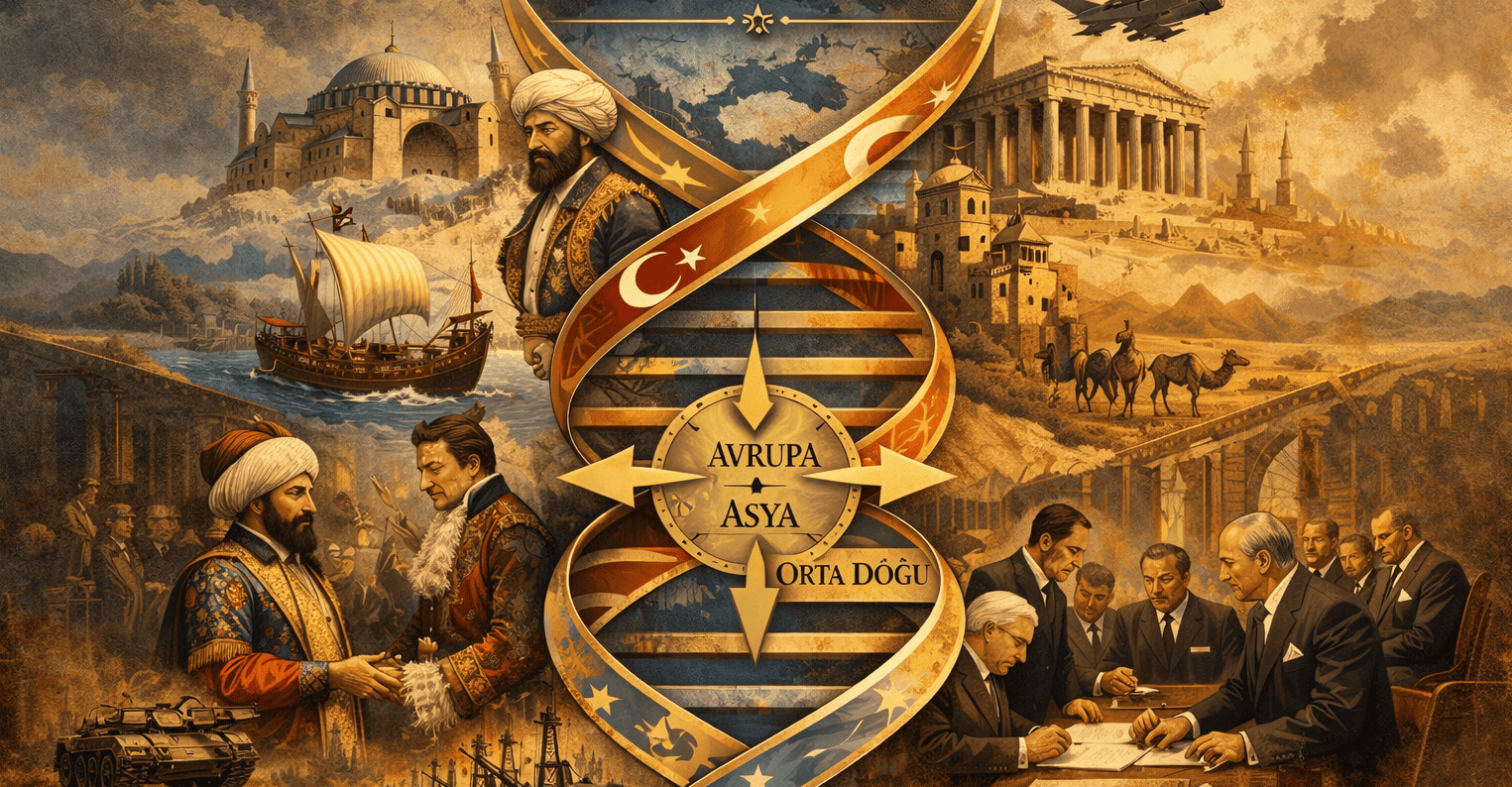
The “Longue Durée” of Turkish Foreign Policy: Geopolitical Memory, State Reason, and Strategic Continuity
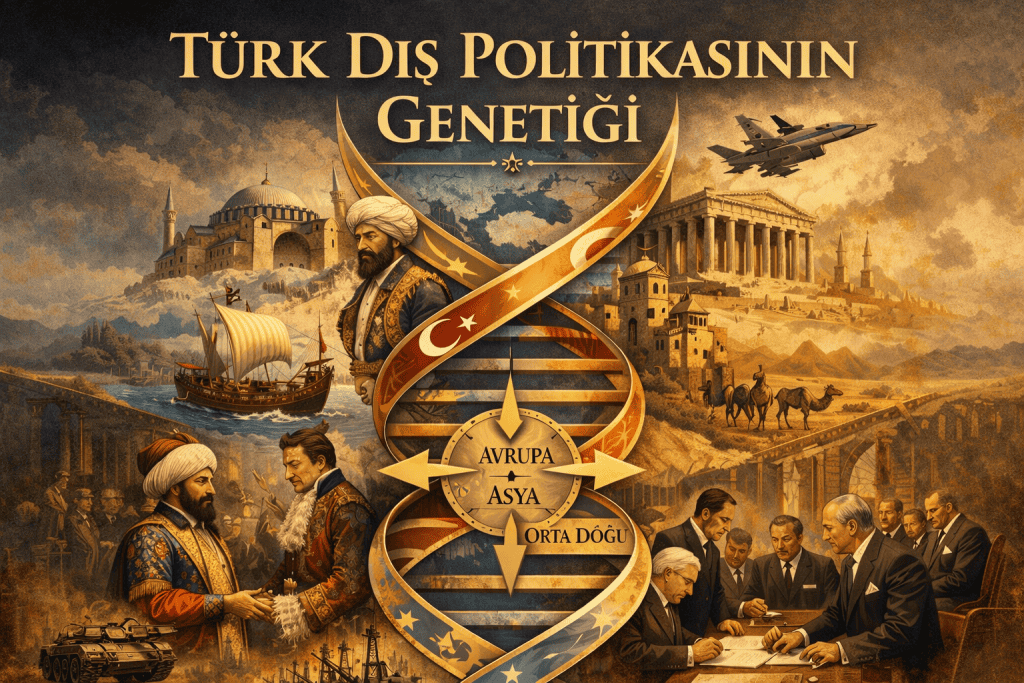
To interpret Turkish foreign policy solely through the narrow window of current events, instantaneous crises, or leader-based pronouncements is to remain trapped on the “episodic” (événementielle) surface of history, as Fernand Braudel famously put it. This superficial gaze misses the deep structural currents—the longue durée—underlying the policy. In reality, Turkey’s foreign policy behavior is shaped by a “political genetic” code of a five-hundred-year-old state tradition stretching from the Ottoman Empire to the Republic, persisting despite ruptures and regime changes. While this genetic structure is reinterpreted through the dominant ideological discourses of the era (Ottomanism, nationalism, Westernism, strategic autonomy), it inherently contains certain immutable behavioral patterns and strategic logic.
1. The Ontology of Being a “Central Country”: From Geopolitical Determinism to Strategic Choice
The most ancient element of the Turkish state mind is the perception of geography not merely as a location, but as a mission. Anatolia and Eastern Thrace sit upon a “geopolitical plate boundary” where the European security architecture intersects with the sectarian and ethnic fault lines of the Middle East, and where the energy corridors of the Caucasus meet the maritime jurisdiction struggles of the Eastern Mediterranean. This position inevitably renders Turkey not an “under-influence country,” but a potential “central country.”
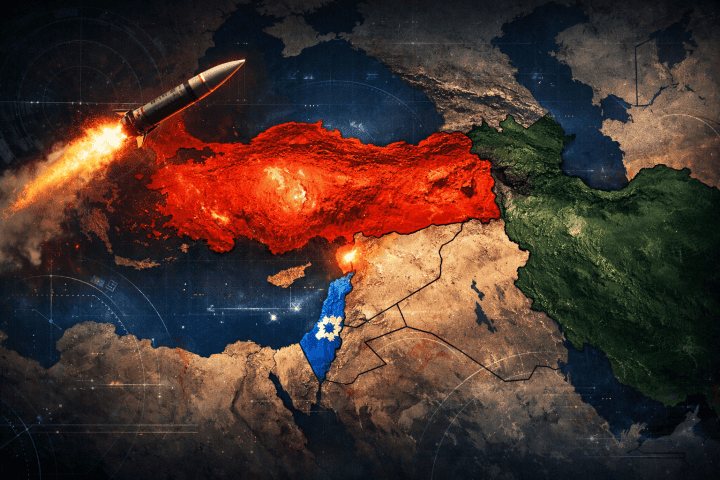
How Will the Iranian Attack Affect Turkey-Israel Relations?
Okumak istersen →This consciousness has ensured the continuity of a multi-dimensional and multi-axis balance-of-power policy inherited from the Ottomans. While the “balance policy” of the 19th-century Ottoman Empire—striving to survive among Great Powers (Britain, France, Russia, Austria)—seemed to evolve into a “peripheral country” role with NATO membership during the Cold War, it was reinterpreted in the multipolar world of the 1990s through Turgut Özal’s vision of “ceasing to be a backyard and becoming a frontline country.” Concepts such as Ahmet Davutoğlu’s “Strategic Depth” or the more contemporary “Floating Center” are, in essence, modern versions of this ancient reflex. The fundamental logic remains unchanged: rather than entering completely into the orbit of a single power center, Turkey attempts to read the system as a whole, preserve its own center of gravity, and position itself at a point of equilibrium advantageous to its interests.
2. Chaos Management and the Power Vacuum Reflex: From Buffer Zone to Playmaker
The second fundamental genetic code of Turkish foreign policy is a historical reaction developed against regional authority vacuums and instability. Since the founding of the Ottoman state, the weakening of Byzantium, the feudal fragmentation in the Balkans, and the competition among Anatolian beyliks served as the first political school on how to capitalize on such power vacuums. This experience was etched into the state’s memory as: “Power vacuums must be filled; otherwise, instability will transcend borders.”
In the Republican era, this reflex manifested particularly when neighboring countries like Iraq and Syria weakened or collapsed. Rather than pursuing a desire to establish direct administration or colonial hegemony in these geographies, Turkey has generally followed a strategy of creating securitized buffer zones, engaging with local actors, and managing the crisis before it spills over its own borders. The “limited military operations,” “stability zones,” and “management of local dynamics” pursued in Syria and Iraq in recent years are modern blends of this classic “crisis management” and “vacuum-filling” reflex, updated with modern warfare technologies and proxy wars.
3. Institutional Memory and Strategic Culture: “Regimes Change, the State Remains”
Even as political regimes and governments change in Turkey, a continuity of raison d’État embodied in institutions like the Ministry of Foreign Affairs and the security bureaucracy can be observed. This continuity is fed by the institutional memory, protocol habits, and diplomatic style transferred from the late Ottoman Ministry of Foreign Affairs (Hariciye Nezareti) to early Republican diplomacy. Therefore, even when radical changes occur in party platforms or leadership rhetoric, certain “autopilot” reflexes kick in within diplomatic practice on the ground and decision-making mechanisms during crises.
These reflexes include:
-
Pragmatism: When ideological goals conflict with realistic power balances, the latter usually prevails.
-
Legalistic and Sovereign Language: A meticulousness in discussing problems on the basis of international law, while simultaneously showing extreme sensitivity toward sovereign rights (e.g., Cyprus, the Aegean, the Mosul question).
-
Negotiatory Diplomacy: A tendency to keep problems at the negotiating table and manage crises rather than allowing them to escalate into direct frontal warfare.
4. Ontological Security and the “Sèvres Syndrome”: Origins of the Security Paradigm
Perhaps the most defining element of Turkish foreign policy is its treatment of “security” on an existential plane, far beyond physical threats. The disintegration of the Ottoman Empire (the process Toynbee called the “Eastern Question”) and the collective trauma created by the Treaty of Sèvres established a deep “ontological security” deficit in the memory of the state and society. This is not merely a perception of threat to territorial integrity, but a sense that the very existence, identity, and survival (beka) of the state are under constant threat.
Consequently, any external development is first filtered through this question: “How does this development affect Turkey’s internal security, territorial integrity, and ultimately, the survival of the state?” This question is the primary driving force behind policies ranging from the Cyprus Operation to cross-border interventions, and from the Straits regime to the questioning of alliances. This security-oriented paradigm also forms the basis of the quest for strategic autonomy that occasionally puts Turkey at odds even with its allies.
5. Subordinating Ideology to Strategy: The Epistemology of Pragmatism
Turkish foreign policy is rich in ideological discourse but remarkably pragmatic in strategic application. This is not a contradiction, but a product of the state mind itself. Ideologies (Pan-Islamism, Pan-Turkism, Kemalist nationalism, conservative worldviews) have functioned less as a source of motivation and more as tools of legitimation—”instrumental discourses” used to achieve strategic goals.
For instance, during the Cold War, anti-communism was both an ideology that reinforced Turkey’s position within NATO and a tool to suppress internal opposition. In the 2000s, the emphasis on Ottoman heritage provided the ideological framework for opening a new sphere of influence in the Middle East. However, when these ideological discourses clash with national interests on the ground (e.g., support for the Muslim Brotherhood versus the balances established with Qatar or Saudi Arabia), they are rapidly sidelined. To understand Turkish foreign policy, one must look not at the ideological vocabulary used, but at the necessities imposed by geography, energy lines, trade volume, and the balance of military power.
Conclusion
In conclusion, the “genetic” structure of Turkish foreign policy is shaped around a consciousness of geopolitical centrality, a reflex to intervene in power vacuums, the continuity of institutional raison d’État, an approach based on ontological security, and a deep pragmatism that subordinates ideology to strategy. While this structure evolves according to the zeitgeist and is interpreted in different tones by different actors, it continues to form the skeleton of Turkey’s worldview and its reactions to crises. Therefore, reading this longue durée behind the noise of daily politics is the key to understanding Turkey’s foreign policy maneuvers.